
- SELAMAT DATANG DI SEKOLAH CALON PEMIMPIN MASA DEPAN - PENDAFTARAN MURID BARU KLIK DISINI
- SELAMAT DATANG DI SEKOLAH CALON PEMIMPIN MASA DEPAN - PENDAFTARAN MURID BARU KLIK DISINI
The Weight of the Calling: Teacher Resilience in the Midst of Workload and Responsibility
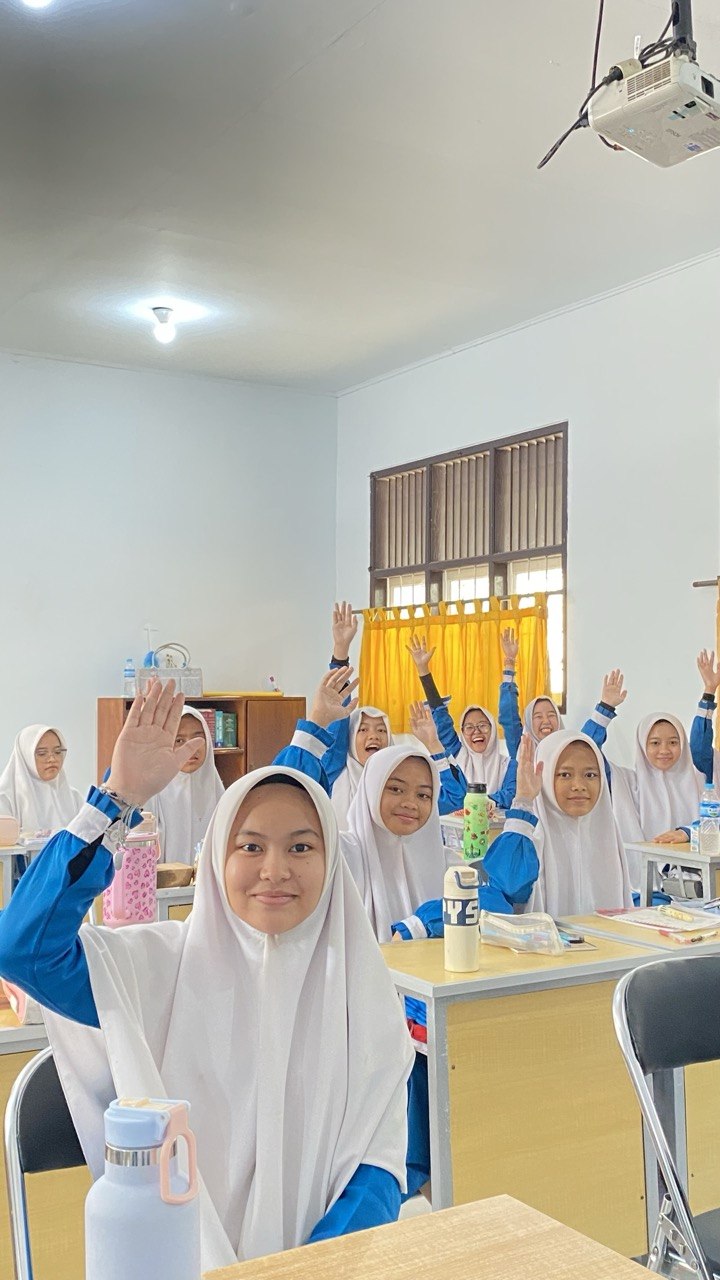
Teaching is more than standing in front of a classroom and delivering a lesson. Behind every lesson are hours of preparation, student guidance, assessment, meetings, school programs, administration, and countless responsibilities that are often unseen. For many teachers, these responsibilities are accepted as part of the calling to educate. There is a genuine willingness to contribute, to serve, and to give the best for students and the school community. Yet, an important question remains: when does commitment become too heavy to carry?
Beyond the Classroom
Today’s teachers are often expected to take on responsibilities beyond teaching. They may become coordinators, committee members, mentors, administrators, event organizers, or supervisors of various school programs. Additional responsibilities are not necessarily negative. In fact, they can provide opportunities for teachers to grow, collaborate, develop leadership skills, and contribute more meaningfully to their school community. The challenge arises when these responsibilities begin to compete with the teacher’s primary responsibility: teaching.
This concern is reflected in international research. The OECD’s TALIS 2024 findings identify administrative workload as one of the important sources of work-related stress among teachers. This reminds us that the demands placed on teachers extend far beyond classroom instruction.
What Does Our Preliminary Survey Tell Us?
To better understand this issue in our own educational context, a preliminary survey was conducted among teachers regarding non-teaching workload, workload pressure, teacher resilience, and teaching effectiveness. Although this was a small preliminary survey and therefore cannot represent teachers in general, the responses provide an interesting glimpse into teachers’ experiences.
The survey showed a relatively high level of non-teaching workload, with an overall average score of 4.25 out of 5. Teachers also reported a high level of workload pressure, with an average score of 4.42. One of the strongest findings was related to lesson preparation. Teachers reported that additional responsibilities could reduce the time available to prepare lessons.
This finding deserves attention because lesson preparation is not simply another task on a teacher’s list. It is part of the foundation of effective learning. Moreover, when time and energy are increasingly divided between teaching and other responsibilities, teachers may have to work harder simply to maintain the same quality of instruction.
Yet Teachers Keep Going
Interestingly, despite these demands, the survey also showed a moderate level of teacher resilience, with an average score of 3.25. The teachers generally perceived themselves as capable of adapting to unexpected responsibilities, remaining committed, and continuing to perform their roles even during demanding periods. Their perceived teaching effectiveness also remained relatively positive, with an average score of 3.67. This tells us something important about teachers. They do not simply stop caring when the workload increases, they adapt, they find solutions, they continue preparing lessons, they continue listening to students, they continue showing up, they continue giving, this ability to continue functioning in difficult circumstances is one expression of teacher resilience.
Resilience Does Not Mean Bearing Every Responsibility Alone
Research on teacher resilience suggests that resilience should not be understood simply as an individual’s ability to endure pressure. Beltman, Mansfield, and Price (2011) describe teacher resilience as involving the interaction between individual and contextual factors. More recent research, including Lu et al. (2024), similarly emphasizes that teacher resilience needs to be understood through the relationship between job demands and the resources available to teachers. In other words, resilient teachers still need supportive environments. A teacher can be hardworking, committed, and resilient, but that does not mean that an unlimited workload is sustainable, this distinction is important. The goal should not be to create teachers who can carry heavier and heavier workloads. The goal should be to create an environment where teachers can perform their responsibilities well without sacrificing their well-being or the quality of learning.
The Weight of the Calling
Perhaps this is what makes teaching unique. Teachers often take on additional responsibilities not because they do not value their time, but because they value their students, their colleagues, and their school community. Their work is connected to a sense of purpose. Their responsibility is not merely a job description. It is a calling. But even a meaningful calling can become heavy. The question, therefore, should not simply be:
“How can teachers become more resilient?”
We should also ask:
“How can we build a school environment that supports teachers in remaining resilient?”
This means creating a healthy balance between responsibilities, providing appropriate support, distributing tasks fairly, protecting adequate preparation time, and ensuring that teachers have the resources they need to focus on what matters most: helping students learn and grow.
A Shared Responsibility
Teacher resilience is not only an individual responsibility. It is a shared responsibility. The teachers can develop healthy coping strategies, strengthen professional skills, support one another, and maintain their sense of purpose. At the same time, school leaders and institutions can contribute by creating supportive working conditions, reviewing workload distribution, and recognizing the demands teachers carry beyond the classroom. Please bear these points in mind.
- When teachers are supported, they are better positioned to support their students.
- When teachers have sufficient time to prepare, they can prepare better.
- When teachers have space to recover, they can return to the classroom with renewed energy.
- And when teachers feel valued, their commitment can become a source of strength rather than exhaustion.
Carrying the Calling Together
The purpose of reflecting on teacher workload is not to suggest that teachers should avoid responsibility. Rather, it is an invitation to understand responsibility more wisely. Every school needs teachers who are willing to contribute beyond themselves. Alongside this, every teacher deserves a system that recognizes that their time, energy, and well-being are valuable. The weight of teaching may sometimes be unavoidable. Nevertheless, teachers should not have to carry that weight alone. A resilient school is not one where teachers simply learn to endure more. More broadly, a resilient school is one where teachers, leaders, and the wider school community work together to ensure that the calling to educate remains meaningful, sustainable, and full of purpose. Because ultimately, supporting teachers is also part of supporting students.
Another Article

0 Comment
Pos Terbaru


Pos Terbaru
Leave a Comment